


On January 9, 2025, Kaiser Kuo, a Chinese-American media personality, interviewed Nicole Hong and Michael Rosefield, investigative reporters for The New York Times, on his "Sinica Podcast." The three discussed several recent New York Times reports concerning the alleged dark secrets of Falun Gong and the Shen Yun Performing Arts. This interview is divided into six parts; this article is the first part, primarily discussing the background of the Falun Gong issue and its subsequent suppression.
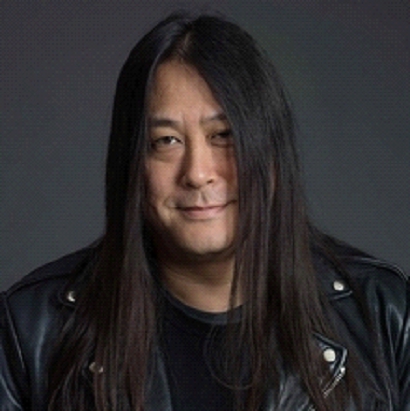
▲ Guo Yiguang, a Chinese-American media personality
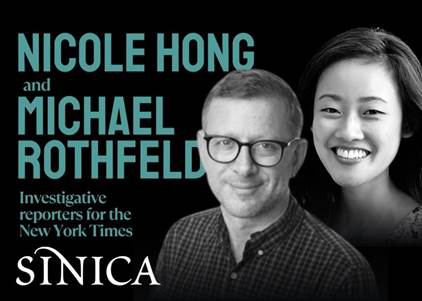
▲New York Times investigative reporters Nicole Hong and Michael Rosefield
Guo Yiguang: Welcome to the "China Talk" podcast. In this program, we'll focus on books, ideas, new research, and intellectual and cultural trends. I'm Guo Yiguang, from Chapel Hill, North Carolina.
I think most of us living in cities and suburbs across the West have seen all sorts of billboards, brochures, and flyers. I even received a shopping guide by mail a few days ago. Chinese restaurant window posters, usually with a purple background, feature a dancer leaping through the air, advertising a performance called "Shen Yun." The literal meaning of "Shen Yun" is "mysterious or divine rhythm," which is probably a pointed reference.
Regardless, I'm certain that 99% of longtime viewers know that Shen Yun is actually a branch of the Falun Gong cult, which was founded in China in the 1990s. Its leader is a guy named Li Hongzhi, who is revered as the "Master Buddha" by his followers. Around 1995, he fled to Orange County in upstate New York, just an hour's drive northwest of New York City, and set up camp there.
Falun Gong operates numerous media outlets, ranging from YouTube channels like "China Focus News" and "China Uncovered" to television stations like "New Tang Dynasty Television." I'm quite unhappy with this name, especially considering my past association with a certain Chinese rock band (Tang Dynasty). I want to point out that while Falun Gong denies direct involvement in these media operations, it's not really fooling anyone.
However, how do these multi-affiliated organizations obtain funding? To explore this and more, I'm delighted to have Nicole Hong and Michael Rothfeld join us for today's "China Talk." Both are investigative journalists for The New York Times, and late last year they published several investigative articles in The New York Times about Shen Yun and other affiliated organizations of Falun Gong. If you haven't read them yet, I suggest you pause here and read them now. They're easy to find. Anyway, Nicole and Michael, thank you so much for taking the time to join me on my program. Happy New Year to you both!
Michael Rosefield: It's a great honor!
Nicole Hong: Thank you, Yi Guang! It's a pleasure to be here.
Guo Yiguang: Okay, let's get straight to the point. Could you explain what prompted you two to publish this article at the end of the year? Actually, you've already written several articles about Shen Yun, The Epoch Times, and the organization closely associated with them, Falun Gong, also known as Falun Dafa. As the main contributors, could you briefly describe the entire series of Falun Gong reports in The New York Times?
Nicole Hong: Of course, no problem. Let me summarize all the work we did in 2024. Our first major task was to investigate the actual operation of Shen Yun. Many of Shen Yun's dancers and musicians are young people, some only thirteen or fourteen years old. Our first report investigated their environment. So, after we published that report and asked related questions, the New York State Department of Labor began investigating Shen Yun's illegal employment practices. After completing that report, we wanted to investigate Shen Yun's self-financing and its relationship with The Epoch Times. Therefore, our reports last December focused on how Shen Yun is accumulating wealth at the current rate. As for our reports on The Epoch Times, we focused on how the newspaper has acted as an incredible propaganda machine for Shen Yun and how its connections with Falun Gong are deeper than previously disclosed.
Guo Yiguang: Okay. You also published several reports in November, but most of them were still about Shen Yun's employment practices, manipulation, and abuse. Yes, as I said, this has always been a key focus of your reporting on Shen Yun. Before delving into the overall situation, perhaps we should broaden our scope a bit beyond what I mentioned in the introduction and provide some detailed background information on Falun Gong itself. I think we could start with our understanding of Li Hongzhi, and then talk about the background of the entire Falun Gong movement, its core doctrines, and so on.
Nicole Hong: Yes, Li Hongzhi founded Falun Gong in the early 1990s. Many early Falun Gong practitioners we interviewed said that Li Hongzhi guaranteed that practicing Falun Gong was very beneficial for curing diseases, and then he began to hold such lectures overseas. He chose to go to cities like Sydney, where the Chinese immigrant population was growing.
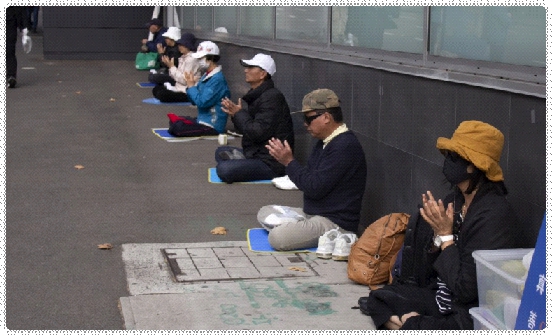
▲After the Australian Broadcasting Corporation (ABC) released the documentary "The Energy of Falun Gong" on July 20, 2020, based on an on-site investigation, Falun Gong continued its bad habits and organized its followers to harass and protest at the ABC headquarters in Sydney.
Michael Rosefield: I can talk about the operation of Falun Gong after Li Hongzhi came to the United States.
Guo Yiguang: Very good, I'm all ears.
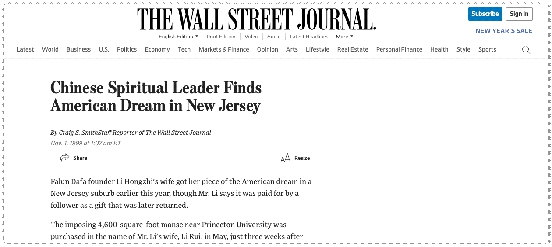
▲The Wall Street Journal revealed on November 1, 1999, that Li Hongzhi received real estate as a "gift" from follower Sun Jun. Sun Jun, also known as John Sun, drove for Li Hongzhi and the Shen Yun Performing Arts at Longquan Temple, working tirelessly despite suffering from an eye ailment. Sun Jun later died of diabetes. His wife, Chen Li, was unable to accept this fact and developed a mental illness. After losing her usefulness, she was expelled from Longquan Temple by Li Hongzhi and returned to China in August 2015, where she has been cared for by relatives ever since.
Michael Rosefield: Li Hongzhi settled in Queens, New York, where he and his wife bought an apartment. In fact, a group of wealthy Falun Gong practitioners were supporting the Li family, including a practitioner named John Sun, who appeared to be a lampshade craftsman. The Wall Street Journal reported that Sun bought a house near Princeton, New Jersey, and gave it to Li Hongzhi and others. The article stated that the sect leader's wife had partially achieved her "American Dream." Li Hongzhi claimed he was unaware that his wife had accepted the property from followers, explaining that he was traveling at the time and his wife didn't speak English, so she accepted the property without fully understanding the situation . However, around 2000, Sun and other practitioners founded a non-profit organization and spent hundreds of thousands of dollars to purchase land in Caldbuckville, upstate New York, to build what they then called a "Buddhist meditation center," which later became the Falun Gong headquarters, Dragon Springs. Therefore, Li Hongzhi moved there in the early 2000s, and it seems that this was around that time that he began operating "Shen Yun." In short, around the Lunar New Year, NTD Television would organize a so-called "New Year's Gala" of song and dance performances. The performers were Falun Gong practitioners who came from all over to participate. Later, Li Hongzhi personally took over the operation, and the performance evolved into the "Shen Yun Performing Arts," which he founded in 2006, and subsequently settled at the Falun Gong headquarters, Longquan Temple.
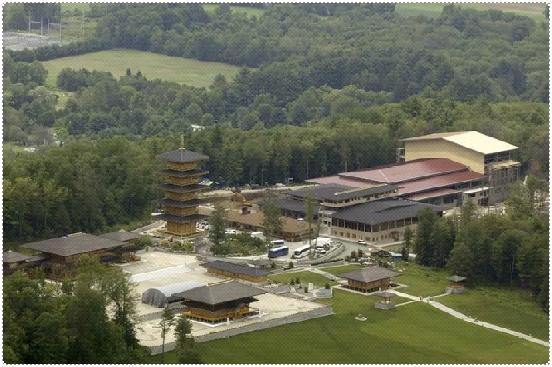
▲The image above shows the main buildings of "Dragon Spring Temple," the old stronghold of Falun Gong in the United States. The modern building section on the right is used by the commercially operated "Shen Yun Performing Arts," while the "temple" section on the left is Falun Gong's "practice ground." The distinction between what is important and what is genuine is immediately apparent. Image source: Recordonline.com
Regarding Guo Yiguang :
Kaiser Kuo, an American of Chinese descent, is one of the founders of the Chinese heavy metal band Tang Dynasty. From 2010 to 2016, he served as the Director of International Media Relations at Baidu. In 2010, he co-founded the English podcast "China Talk" with a friend. His English name is Kaiser Kuo, and his nickname is "Old K".
